
My Private Sky
Have you ever entered an exhibition space, going into it with one intention and coming out with another? That is to say, sometimes the art and the artist statement display two different interpretations of the same thing. A year ago, I entered the Astrup Fearnley Museet with no expectation, to see an installation depicting retrofuturism with homoerotic subtexts, only to come out of it with a completely new perspective (Astrup Fearnley Museet, 2001). I suppose that’s what cultural institutions like the Astrup Fearnley Museet are for: to change our perspectives on the modern world. Donna Haraway writes, “Perhaps the outrage meriting a name like Anthropocene is about the destruction of places and times of refuge for people and other critters.” The destruction of life (as we know it) cannot simply be put in terms of the Age of Humans, but, as Haraway puts it, can be identified by a name like Capitalocene or Plantationocene (Haraway, 2015). These identifiers further explain that ecological collapse is not simply due to humanity but to systems of capitalist control (ibid.). Last year, I took a solo trip to Oslo. Upon arrival, I became a spectator of Børre Sæthre’s My Private Sky, a contestation of authority. The vibrant acrylic white walls, beaming with LED lights, created an atmospheric immersion as sound is circulated throughout the space. The installation is analysed as a cultural sector mimicking themes of artificiality, governance, and environmental alienation. Through an interactive spatial landscape, the exhibition destabilises the viewer's perception, challenging systems that reflect capitalist behaviours in modern society.
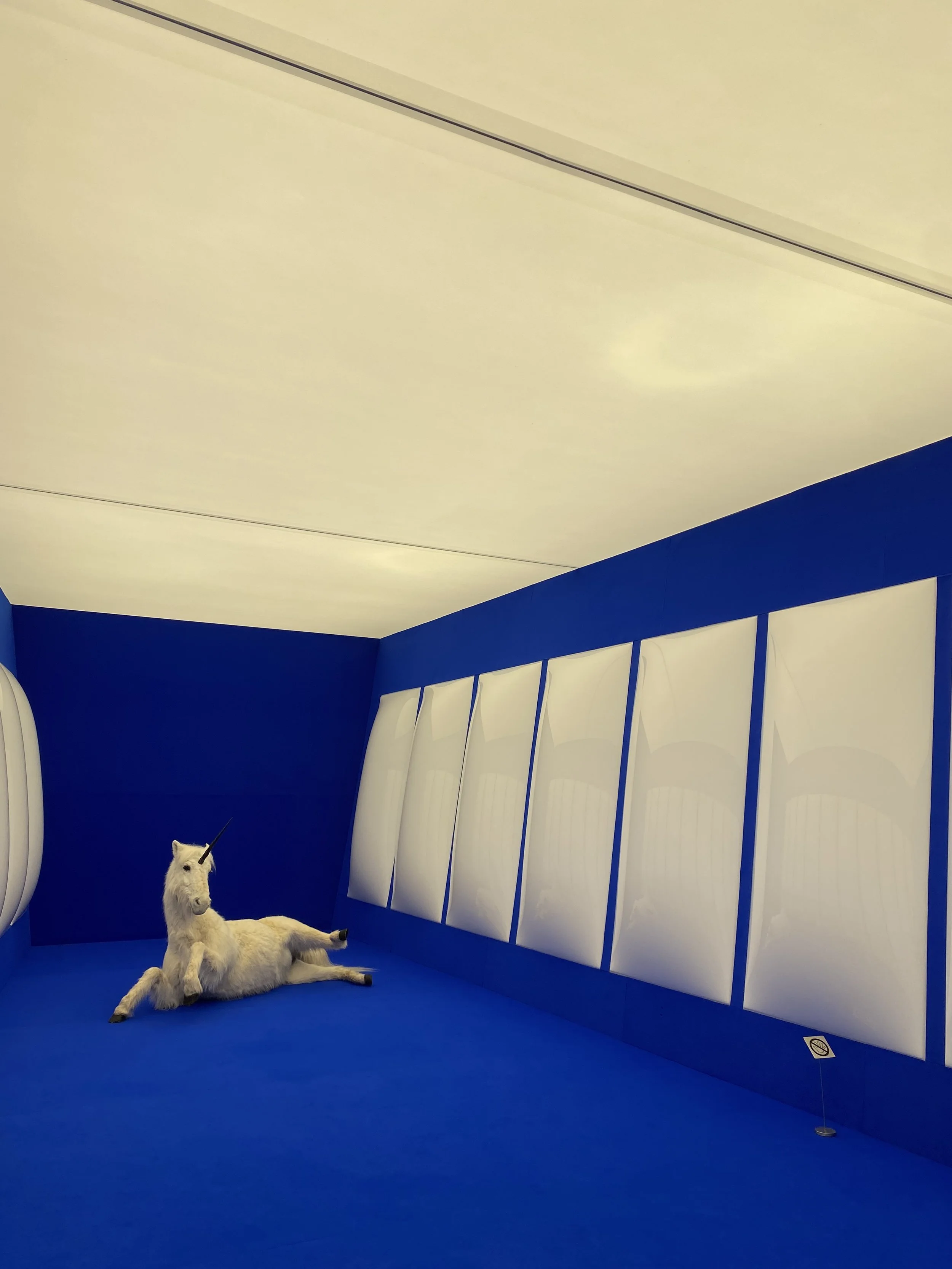
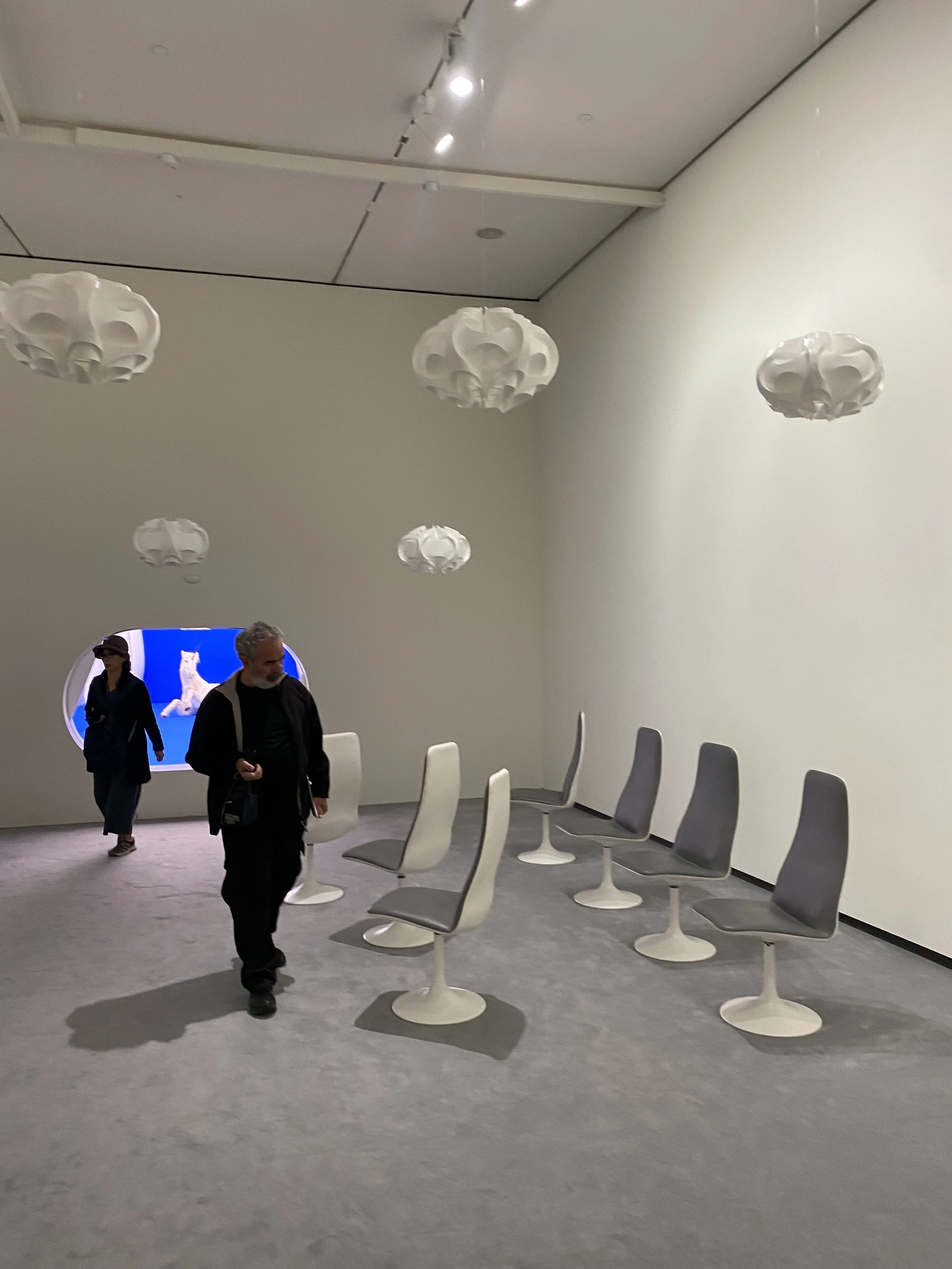
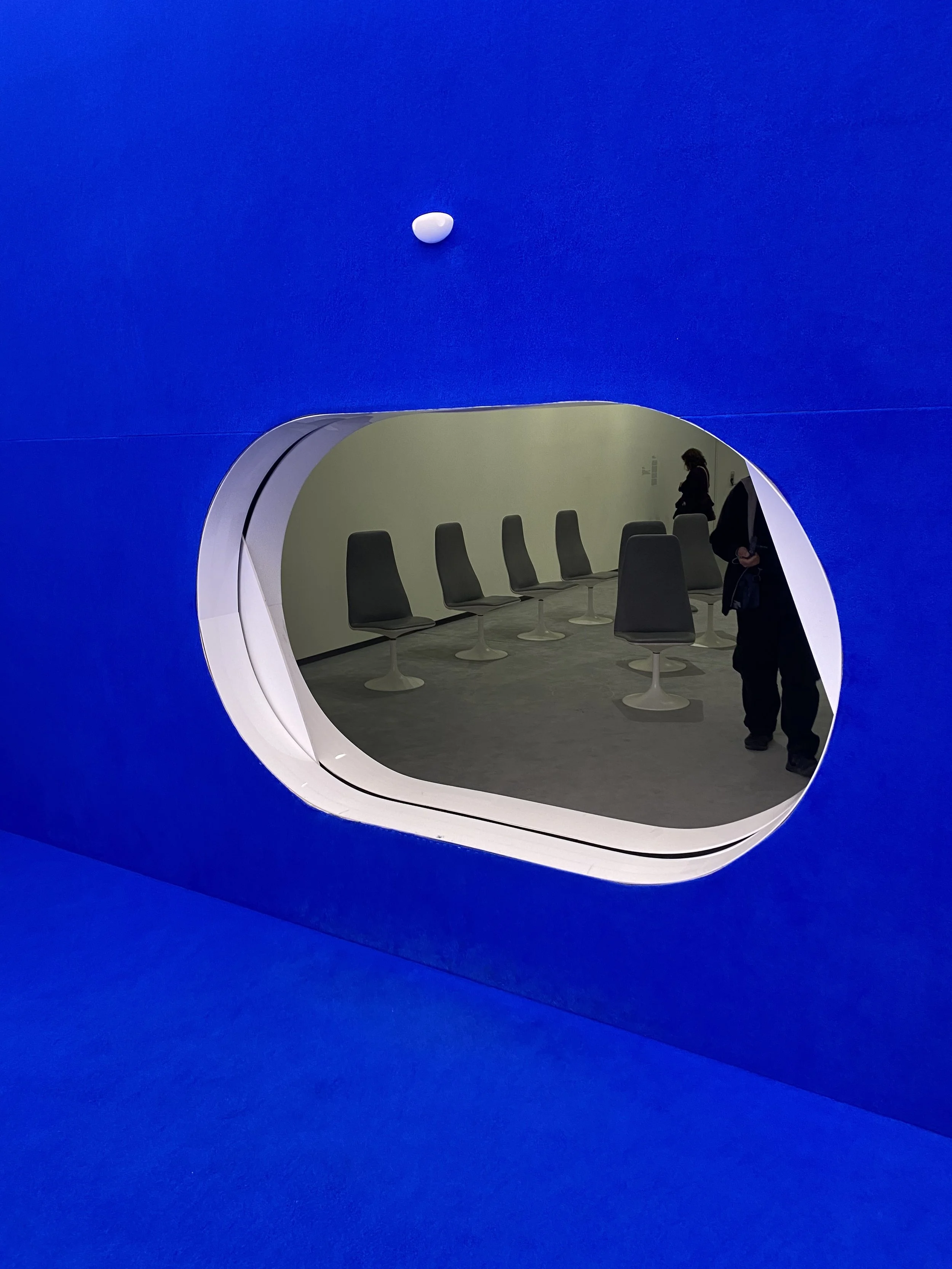
My Private Sky
Astrup Fearnley Museet (Oslo, Norway, 2025)